Vintage Harley engines: Knucklehead, Panhead or Shovelhead?
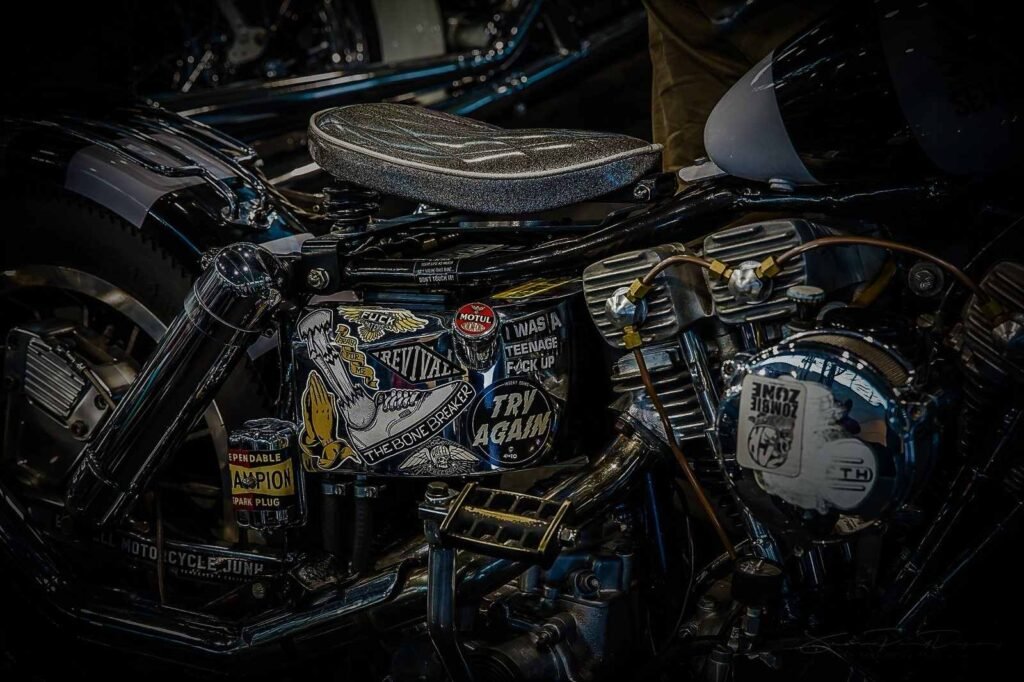
A custom Shovelhead detail from the School of Cool archives. Appearance alone does not confirm the complete engine configuration.
In this article
To recognise a vintage Harley engine, start by looking at the top of the cylinders. Knucklehead, Panhead and Shovelhead take their nicknames from the shape of their covers. This small detail opens a much bigger story. It can also help you avoid ordering the wrong parts.
A repainted tank and a modified frame sometimes make a motorcycle harder to read. The engine carries other clues. This guide gives you pointers, while identification still depends on the cases, references and actual configuration.
Vintage Harley engine names: three families to remember
| Family | Production period | Nickname clue |
|---|---|---|
| Knucklehead | 1936–1947 | Shapes resembling the knuckles of a fist |
| Panhead | 1948–1965 | Upper covers resembling small pans |
| Shovelhead | 1966–1984 | A shape associated with a coal shovel |
These periods refer to the original engine families. They come from Harley-Davidson’s official engine history. On their own, they cannot date a custom bike assembled from different components.
Knucklehead: look at the top-end shapes
The Knucklehead nickname refers to its rocker-cover shapes. This family marked the arrival of overhead valves on Harley-Davidson Big Twins. To recognise it, look at the top end rather than the motorcycle’s decoration.
In a photograph, first look for a clear view of both cylinders. Then compare the sides and the top. A solo seat or short fender may suggest a style. Neither confirms an engine family.
Panhead: the little pan-shaped covers
The Panhead’s upper covers gave this generation its nickname. It followed the Knucklehead with changes including aluminium cylinder heads. The shape of those covers is the first visual clue to seek.
However, a very dark photograph can hide the forms you are trying to read. Ask for an unfiltered image of each side in natural light. That small effort helps more than enlarging a blurry thumbnail.
Shovelhead: a more hollowed-out silhouette
The Shovelhead is recognised by the covers that inspired its shovel nickname. Harley-Davidson later offered it in 74 and 80 cubic inches. The general appearance gives you a clue. Identifying the exact version takes more information.
You have already met this family on the blog, including Nico’s Shovelhead ride and our archive of a 1982 Shovelhead kick-start. These bikes also show how much a custom build can change the silhouette around an engine.
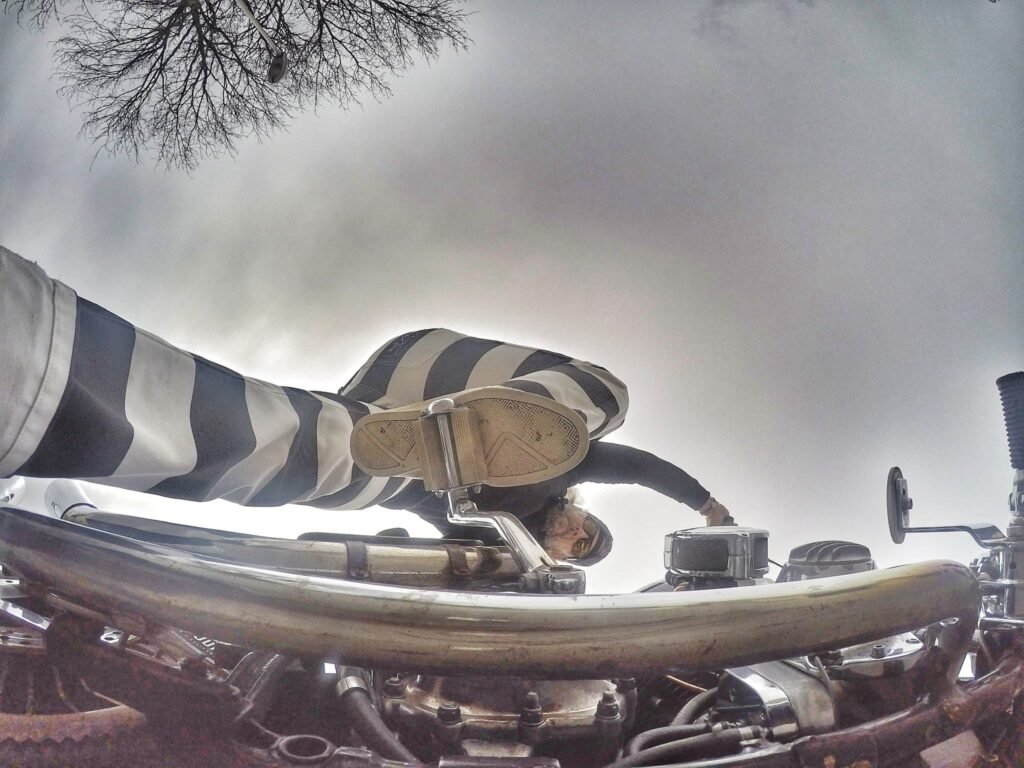
Identify a modified motorcycle one step at a time
In the custom world, the registration year and the appearance do not always tell the same story. Before drawing a conclusion, separate four questions: which frame, which cases, which top end and which fitted accessories?
- Photograph the whole motorcycle and both sides of the engine.
- Record useful references and gather the available documents.
- Compare the position of the parts you intend to replace.
- Have the identification confirmed if components are mixed or you remain unsure.
The previous owner may have an invoice or a photograph of the assembly. Keep those records with the bike’s documents. They help with servicing, resale and ordering. A clear history gives you better reference points than a nickname in an advert.
Finally, avoid choosing a part from the sound of a video alone. The sound attracts your ear, but it does not identify a mounting arrangement. Photographs, references and measurements answer that question.
Ordering parts for a vintage Harley engine
A point cover is a useful example. You may like an engraving, but the fixing and application still need to suit your setup. On our listings, select the variant for the engine, then check the fixing centres or mounting before ordering.
The Hold Fast point cover offers different applications, including Shovel 1340, Evo and several Sportster models. The AMF point cover also has variants. Featuring them here does not mean that they fit every Knucklehead or Panhead.
For the Hold Fast custom kick pedal, the listing states a fixing of approximately 12.4 mm. Compare your kick arm and its mounting. A roughly similar diameter does not justify an improvised adaptation.
Hold Fast details for an identified project
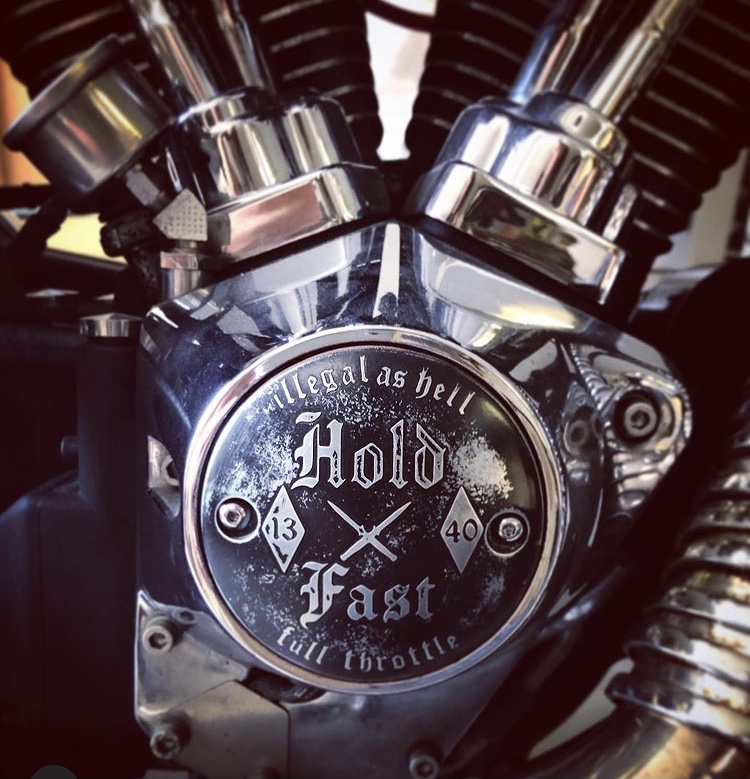
Hold Fast point cover
Old school engraving with application-specific variants. Choose the model after identifying the engine and its fixing.
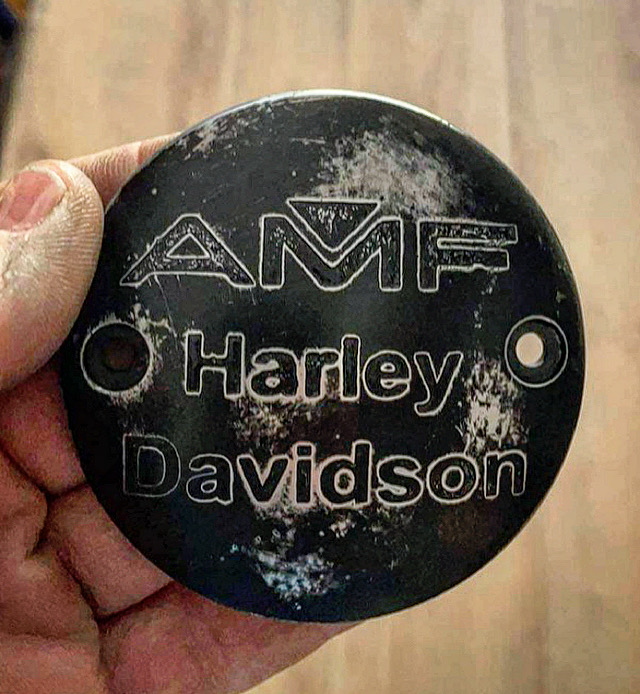
AMF point cover
Patinated finish and AMF design. Confirm the available variants and mounting on the product page.

Hold Fast custom kick pedal
Hold / Fast lettering and a listed fixing of approximately 12.4 mm. Check compatibility with your kick arm.
The product pages open in a new tab. If you are unsure, contact School of Cool with the model, year and clear photographs. To organise the project, also read our guide to starting a vintage Harley restoration.
Questions about vintage Harley engines
Should the engine and frame be the same age?
A modified vintage motorcycle may combine different components. Check its history and references. Do not infer the engine generation from the advertised year alone.
Can you identify a vintage Harley engine from one photo?
An image can offer a visual clue. To establish the configuration and order a part, also ask for the other side, references and relevant measurements.
Which family is best for a first project?
The right choice depends on condition, records, budget and the help available. A well-documented, coherent motorcycle deserves attention before a flattering silhouette that is difficult to identify.
Keep your eyes on the details. A part chosen for the right mounting will always make more sense than a part bought for a name.