Men’s vintage motorcycle boots: choosing your pair
In this article
A vintage boot should support your ankle on the motorcycle, handle rain and age with you. Height, leather, soles and fastenings: here is how to choose, model by model, from the Pike Brothers boots we sell.
For regular riding, choose boots that cover your ankles. The 1966 Explorer is the most motorcycle-focused model in the range, with toe and ankle reinforcement. For rain and cold, choose the 1946 Mountaineer with its tall shaft. To avoid laces, choose the 1945 Tanker with buckles. The 1966 Low Quarters, our bestselling shoes, are designed for city wear rather than the road.
Vintage boots or certified motorcycle boots?
This is the first question to ask. In France, approved helmets and gloves are compulsory when riding a motorcycle; boots are not. However, there is a specific standard for motorcycle footwear, EN 13634, which tests abrasion, cut and crush resistance.
The boots in this guide are reproductions of work and military models from the 1940s to the 1960s. They do not claim this certification. They provide substantial ankle support and thick leather, far more than trainers, but for intensive use or track riding, certified boots offer better protection. Many bobber and chopper riders knowingly choose vintage styling: it helps to make that choice with the right criteria.
5 criteria for choosing vintage motorcycle boots
1. Shaft height
This is the main criterion for motorcycle riding. A shaft covering the ankle bone helps protect the ankle from impacts, the exhaust and the gear lever. Low shoes leave the ankle exposed: ideal in town, less reassuring on the road.
2. Leather
Full-grain cowhide offers better abrasion resistance and develops a patina over time. Oiled or waxed leather handles rain better. Rough-out leather has a more military look but needs more care.
3. Sole and construction
The Goodyear welt is the traditional construction used for work boots: the sole is stitched to a welt, making the boot robust and resoleable. Most Pike Brothers models use this construction. A grippy rubber sole also matters: when you stop, it keeps you steady on a wet road.
4. Fastening
Laces allow precise adjustment, but a loose lace can catch on the gear lever or footrest. Side buckles, as on the Tanker, avoid this risk.
5. Size and comfort
Thick leather boots need a few outings to mould to your feet. Choose your usual size, allowing for winter socks if you ride in cold weather.
Which model for which use?
The most motorcycle-focused: 1966 Explorer
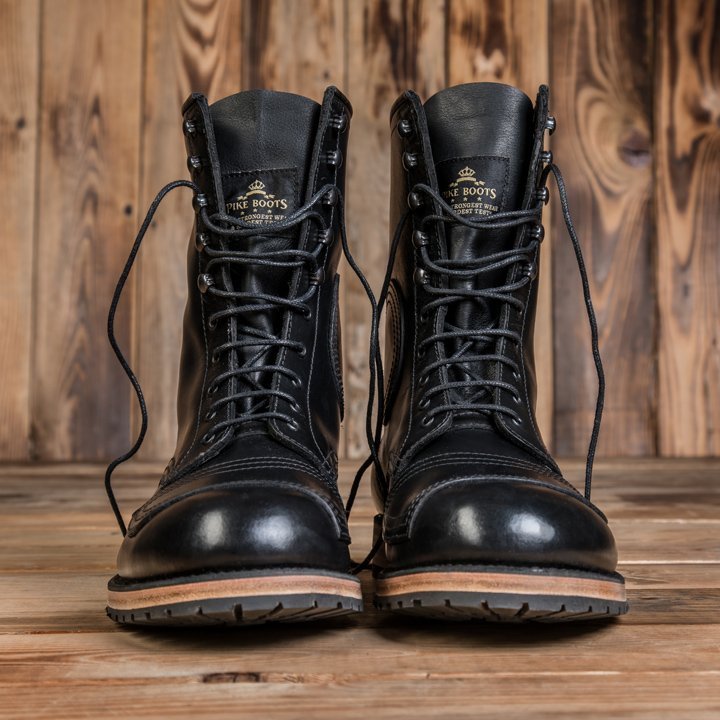
The black 1966 Explorer combines a classic motorcycle boot with a 1960s work boot. Toe and ankle reinforcement and a grippy outdoor sole make it the best-suited pair for daily riding or kick-starting a bobber. It is also available in brown. Around €240 to €250.
No laces: 1945 Tanker
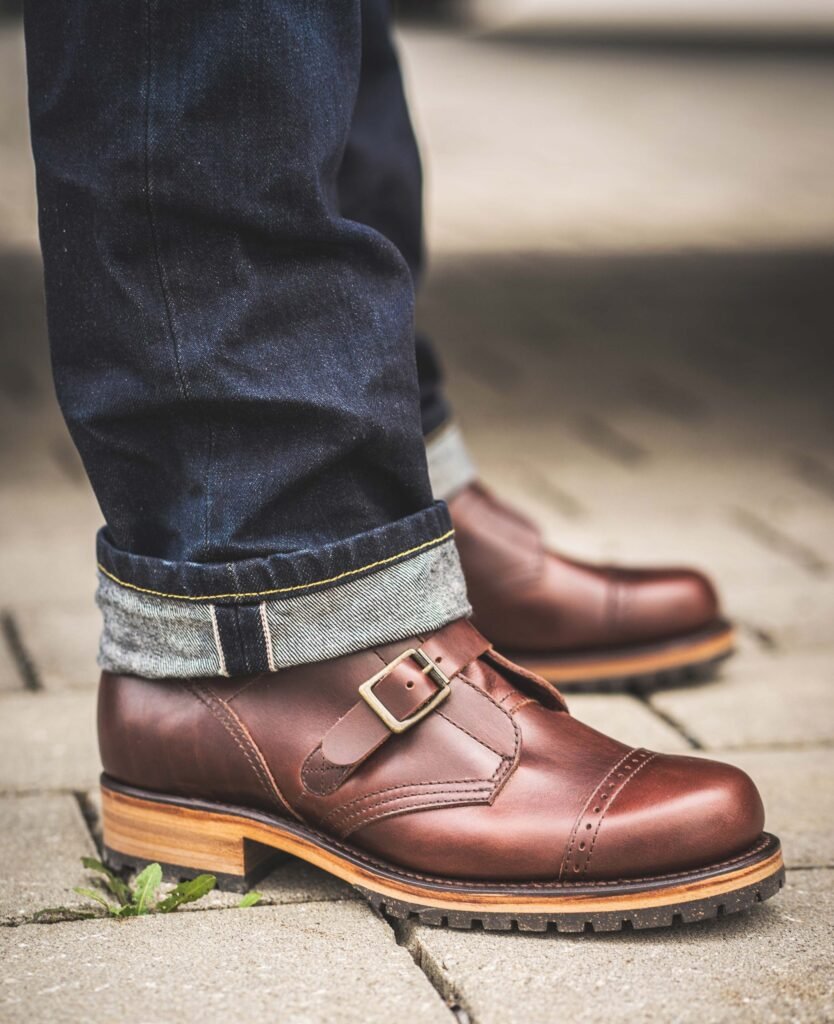
Inspired by US Army tank crews’ boots, the Tanker fastens with side buckles, leaving no laces to watch. Premium leather, Goodyear-welted construction. In cognac or brown, 249 €.
For rain and cold: 1946 Mountaineer
A tall shaft, commando sole and inspiration from 1940s mountaineering boots: the Mountaineer offers the most coverage in the range, for autumn road trips and mountain passes. In black or bourbon, 299 €.
Work boots: 1947 Trapper and 1947 Hunting
The Trapper revisits North American trappers’ boots: brown leather, a mid-height shaft and robust lacing (€249). The 1947 Hunting Boots take inspiration from 1940s hunting boots, with full-grain cowhide and Goodyear-welted construction (€299).
The military look: 1952 Lowkinawa
Inspired by 1950s jungle boots, the rough-out Lowkinawa has a mid-height shaft in rough-out leather. The most affordable model in the range: €139.
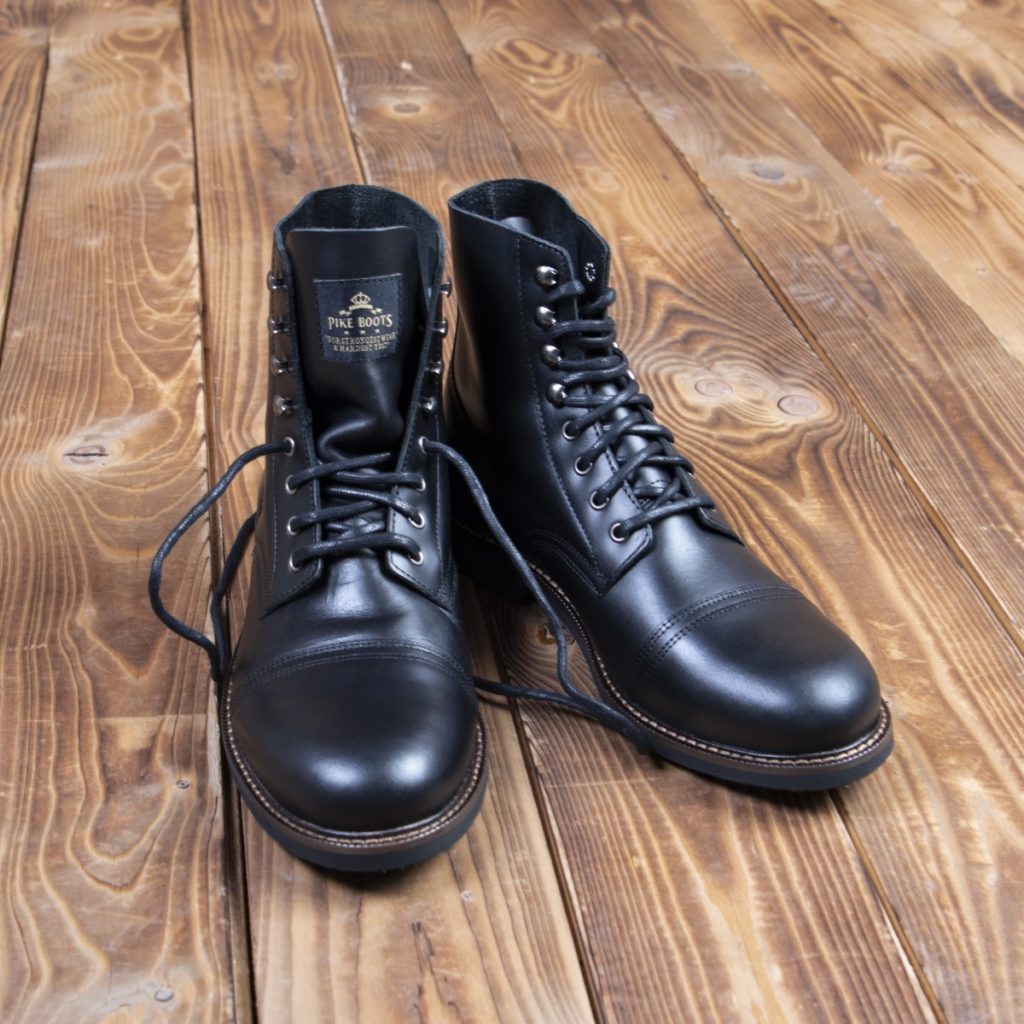
For city wear: 1966 Low Quarters
Our bestselling shoes. The Low Quarters take inspiration from 1960s US Army shoes: thick leather, a non-slip Neva Slip sole and Portuguese manufacture. Their low cut leaves the ankles unprotected: ideal for getting off the motorcycle and finishing your day, less suitable for long rides. €149, in several colours including cognac.
Quick comparison
| Model | Height | Fastening | Recommended use | Price |
|---|---|---|---|---|
| 1966 Explorer | Ankle-covering | Laces | Daily riding | 239 – 249 € |
| 1945 Tanker | Ankle-covering | Buckles | Riding, without laces | 249 € |
| 1946 Mountaineer | Tall | Laces | Rain, cold, road trips | 299 € |
| 1947 Trapper | Mid-height | Laces | Riding and everyday wear | 249 € |
| 1952 Lowkinawa | Mid-height | Laces | Military look | 139 € |
| 1966 Low Quarters | Low | Laces | City wear | 149 € |
Caring for leather boots
Goodyear-welted boots can last for decades with proper care: let them dry away from radiators after rain, nourish them regularly with wax or leather grease, and have them resoled when the soles wear out. Find all our advice in 10 ways to make your boots last.
Frequently asked questions
Are boots compulsory for motorcycle riding?
No. In France, only approved helmets and gloves are compulsory. Ankle-covering footwear is still strongly recommended to protect the ankles.
Can you ride in low shoes?
Yes, but your ankles remain exposed. For short city trips, thick leather shoes such as Low Quarters can work; for road riding, choose ankle-covering boots.
Do Pike Brothers boots run large?
They are offered in European sizes. Choose your usual size; thick leather needs a few outings to mould to your feet.
Why choose Goodyear-welted construction?
Because a cobbler can replace the sole. The boot can be resoled rather than thrown away, while the leather keeps the shape of your foot.
All our vintage motorcycle boots
Explorer, Tanker, Mountaineer, Trapper: the complete Pike Brothers collection.