How to tell if a Harley-Davidson has Stage 1
In this article
Introduction: the roar of an unleashed Harley
Ah, Harley-Davidson… A rolling myth. A symbol of wind in your beard, untamed freedom and worn leather. But you are not here just to talk about this legendary machine. You have heard a Harley singing louder than the others. Or you have been looking at your own engine and wondering: “What if mine has Stage 1?” You are in the right place. Today, we will break down what Stage 1 on a Harley-Davidsonmeans, how to recognise it, why it has cult status and, above all, how to tell whether your machine has been modified or is still running in stock form.
What is Stage 1 on a Harley-Davidson?
Before playing Sherlock on the road, you need to know what we are talking about. “Stage 1” is the first level of performance modification for a Harley. Nothing complicated, but it changes everything.
Stage 1 mainly consists of three elements:
A freer-flowing exhaust, often a two-into-one or a loud slip-on.
A high-performance air filter that breathes better than an old wet bandana.
An ECU remap (engine map), to make everything work together.
The magic combination that gives your V-twin a deep breath of fresh air and lets it growl as it should.
Why fit Stage 1 to a Harley?
Because you are not here to do knitting. Stage 1 is like taking the muzzle off a pit bull. You want it to growl, pull and vibrate beneath your leather.
The benefits:
Deeper sounds, rougher tones. The kind that wake the neighbours at 6 a.m.
Improved torque, especially at low revs. Ideal for overtaking without changing down.
Personalised looks with engraved custom motorcycle parts. Stock exhausts are fine for catalogues.
Engine responsiveness. It feels like rediscovering your motorcycle.
How to recognise a Stage 1 Harley-Davidson?
This is where it gets interesting. For seasoned bikers, spotting Stage 1 is almost child’s play. If you are unsure, here are the telltale signs.
1. The sound: a Harley that speaks loudly
A Stage 1 exhaust does more than make noise. It sings. Low, deep and wild. If it pops on deceleration and growls at idle, there is a good chance it has Stage 1.
2. The exhausts: more distinctive, more open
Look at the exhausts. Screamin’ Eagle, Vance & Hines, Bassani or another bold brand? That is a strong clue. Stock exhausts are larger, quieter and sometimes restricted. To give your motorcycle a signature and mark your territory, a well-placed Hold Fast sticker finishes the job.
3. The air filter: custom lungs
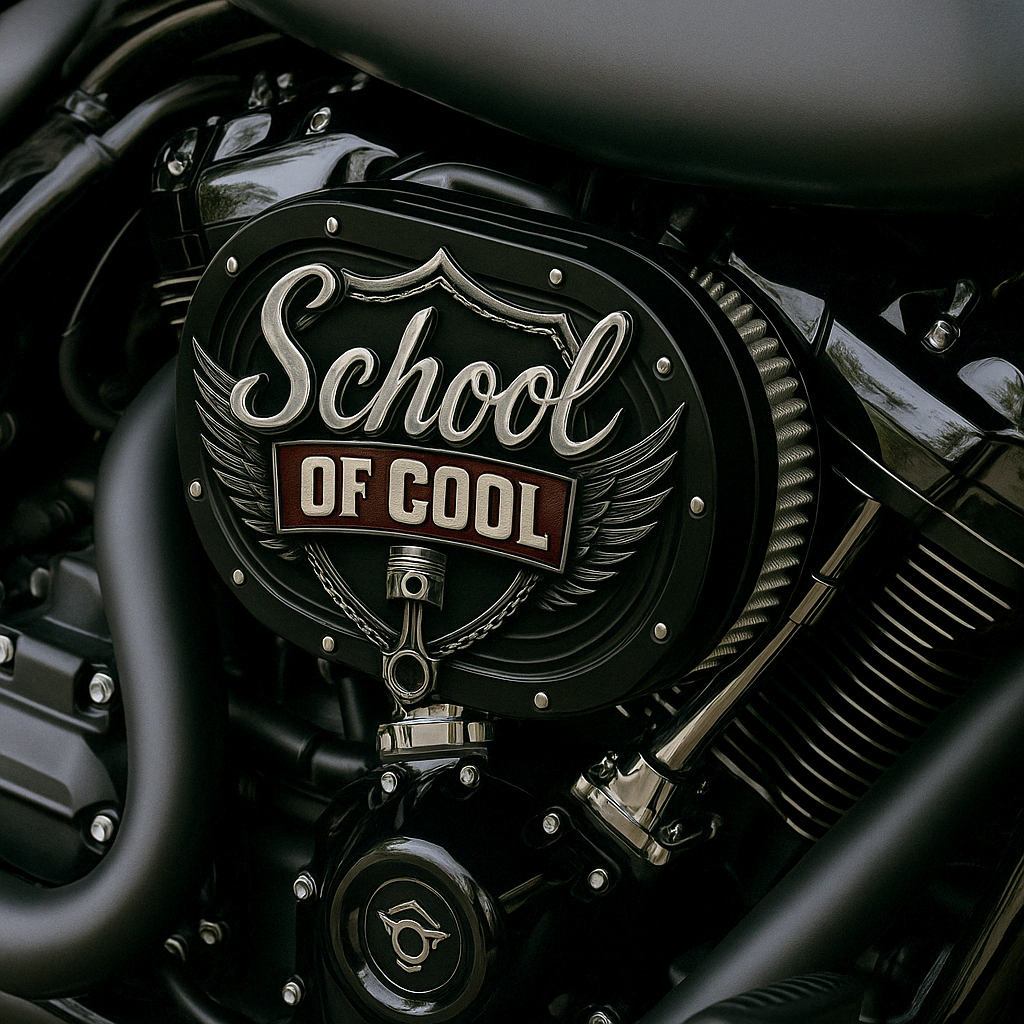
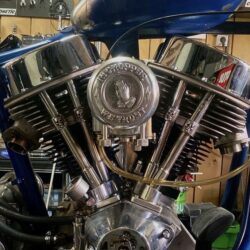
Look at the side of the engine. An exposed air filter, often cone-shaped or retro-styled, indicates Stage 1. Screamin’ Eagle is a classic, but there are many others.
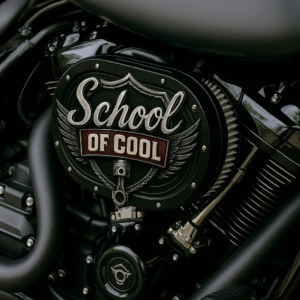
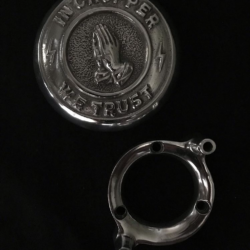
“In Chopper We Trust” Filter Cover
The brass cover that turns your high-performance air filter into a workshop jewel. Visible, engraved and irreverent. A Stage 1 finish without the dealer’s bill.
4. Engine behaviour
A Stage 1 Harley revs more quickly. It responds better to the throttle, like an awakened beast. If your motorcycle seems to say “Go on, give it some”, it may already have Stage 1.
5. The tuning module or remapping interface
Some bikers leave the module connected under the seat. Power Vision, Screamin’ Eagle Pro Tuner, Vance & Hines Fuelpak… Find one of those? Bingo.
The risks of a poorly executed Stage 1
Modifying is good. Modifying properly is better. A rushed Stage 1 is like a skull tattoo done by a dentist. It can hurt your motorcycle and your wallet.
Potential risks:
Poor engine settings = excessive fuel consumption or reduced performance.
Unsuitable filter or exhausts = premature wear.
Problems with technical inspection or insurance.
Always trust a specialist Harley workshop or a mechanic who smells of oil and clutch sweat. Not Kevin, who has only watched a YouTube tutorial.
What about legality?
Now, my friend, we enter the grey area. Technically, any modification affecting noise or emissions can cause problems on public roads. In real life? As long as it stays reasonable and you have not turned your Harley into a Mad Max dragster, you are often left alone.
Keep your original parts. If something goes wrong or you are stopped for a check, they can save you a lot of trouble.
How much does Stage 1 cost?
The price varies with the parts’ brand, the type of Harley and whether you do the work yourself.
Average range:
Exhaust: €600–1,500
Air filter: €150–400
ECU remapping or module: €300–700
Labour: €300–600
Total: €1,300–3,000. But the joy of feeling your engine finally breathe is worth a few notes.
Give your Harley character without waking your banker
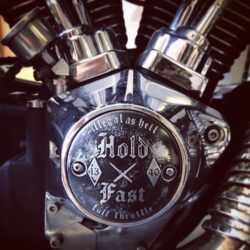
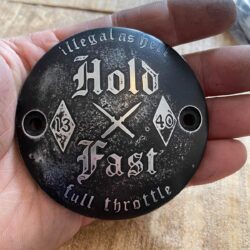
Not ready to spend €3,000 straight away? The good news is that details can also give a motorcycle its signature. An engraved points cover, a brass side plate, a custom gear lever or a bold filter cover: Stage 1 DNA without a dyno session. Our Hold Fast workshop machines its parts in Marseille, engraving them one by one.
-

Point Cover / Ignition cover HOLD FAST for harley-davison
119.00€ TTCSelect options This product has multiple variants. The options may be chosen on the product page -
-
Sale!
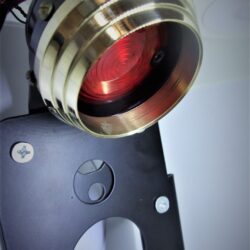
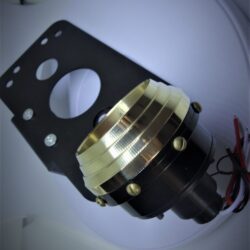
Air Carburator Cover “In Chopper We Trust”
Original price was: 192.00€.168.00€Current price is: 168.00€. TTC -
Shop all Hold Fast custom parts →
The final word: breathe, growl, live!
A Harley-Davidson is more than a two-wheeler. It is a road companion, a lifestyle and an extension of your personality. Giving it Stage 1 is more than boosting an engine. It lets the machine fully express itself.
If you have recognised some of these signs on your motorcycle, or are considering taking the step, do not hesitate. Do it properly. Above all, do it for yourself.
Ride hard, ride free, and above all… stay cool.