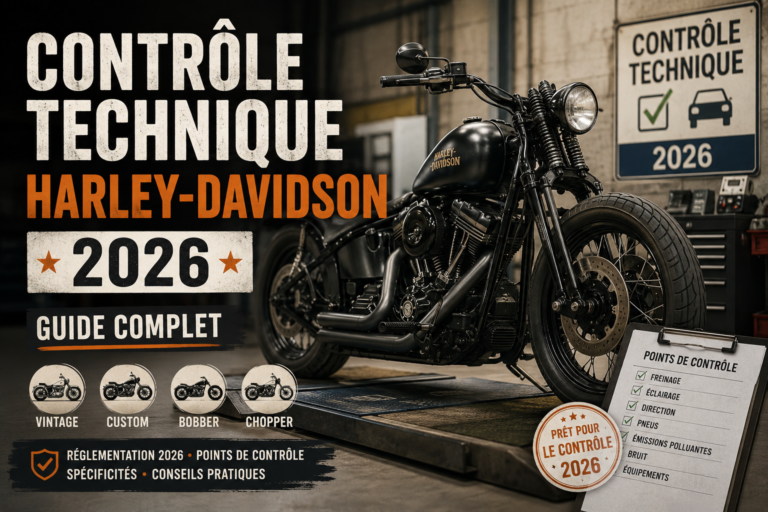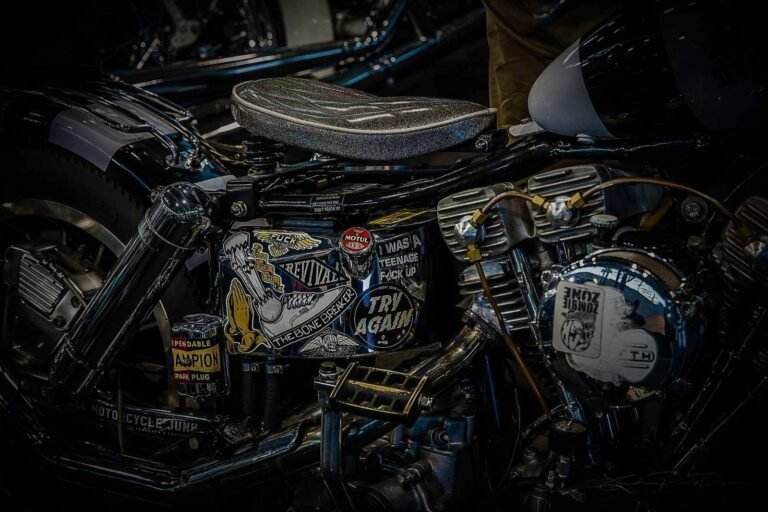
Harley-Davidson technical inspection 2026 – the complete guide to passing inspection
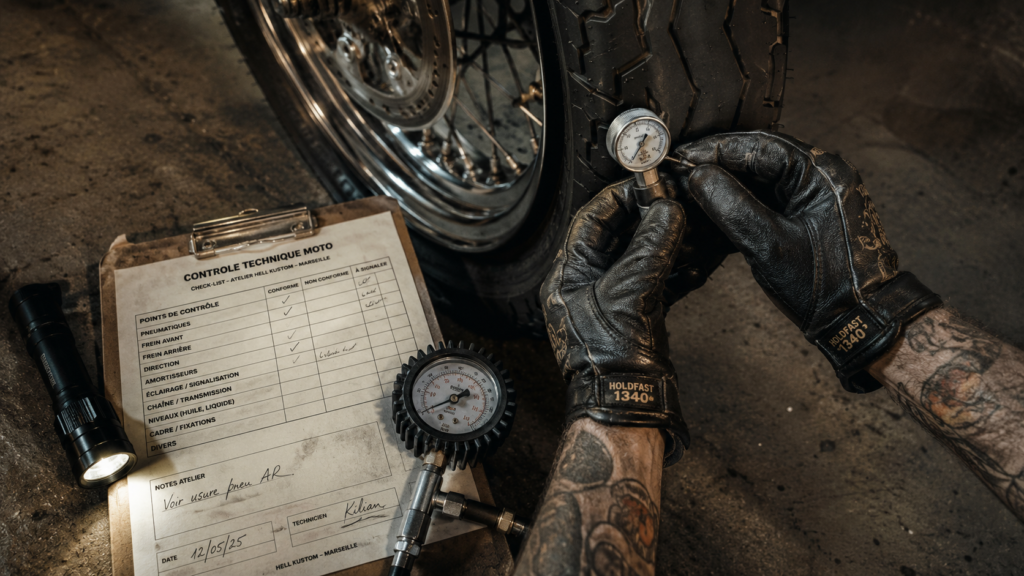
In this article
2026 is a key year: all Harleys registered between 2020 and 2021 must undergo their first technical inspection. If yours has a Stage 1 setup, check 7 key points before the appointment. Here is the complete checklist.
Harleys registered in 2020–2021 must undergo inspection in 2026 (official schedule). For Stage 1, check the exhaust (noise and emissions), air filter (approved?), ECU remapping (legal map?), lights and markings, and noise at 50 km/h. The inspection costs €50–70 and takes 30 minutes. A properly completed Stage 1 passes without problems – you just need to prepare ahead.
Who needs a motorcycle inspection in France in 2026?
The official schedule for motorised two-wheeler inspections in France (2023 decree) is phased:
| Registration date | First compulsory inspection |
|---|---|
| Before 01/01/2017 | Before 31/12/2024 (deadline passed) |
| 2017-2019 | In 2025 |
| 2020-2021 | In 2026 (this applies to you) |
| 2022 onwards | 5 years after first registration |
If your Harley was registered in 2020 or 2021 (Sportster S, Pan America, Low Rider ST, Softail Standard, etc.), book an appointment at an approved inspection centre, often **6 months before** its fifth anniversary to secure a slot.
Stage 1: what could cause your motorcycle to fail
A Stage 1 setup usually combines 3 changes: a Vance & Hines / Screamin’ Eagle exhaust, a high-flow air filter and ECU remapping to adapt the map. If all parts are CE / E11 approved and the remapping is legal, it passes. Otherwise, watch for the following pitfalls.
1. An unapproved exhaust
This is the number-one reason for failure. Many V&H exhausts imported from the USA do not have European E11 markings. The inspector will look for the stamped marking on the silencer. No marking means failure. Solution: refit the original exhaust for inspection or fit an approved exhaust (for example, the CE-approved V&H Eliminator).
2. Noise at 50 km/h
The inspector measures noise with a sound level meter 75 cm from the exhaust. The legal limit is 96 dB (according to the Zero Noise at 50 km/h directive). A poorly adjusted Stage 1 often exceeds 100 dB. If yours does, fit a baffle (dB killer) in the exhaust; it can be unscrewed in 5 minutes.
3. ECU remapping
If a tuner has reflashed your ECU using PowerVision or Dynojet, the inspector will not see it (they do not connect to OBD). However, additional checks, such as exhaust emissions measurements, may reveal an excessively rich map. Solution: return to the original map if you are unsure, or ask your tuner for a legal map (95 dB maximum).
4. Lights and markings
If you have replaced your original headlight with a vintage Electroline headlight, check that it carries an E11 marking. Our models do. The same applies to switchgear and levers : they must allow the lights to operate in the normal order.
5. The registration plate
Fan-tail plates (diamond-shaped or custom formats) are rejected at inspection. Required size: 210 x 130 mm for motorcycles registered after 2017. Advice: refit the legal plate for inspection, then return to the fan-tail afterwards.
6. Tyres
Tyres marked Not for road use or dragster tyres are rejected. Also check tread depth (1.6 mm minimum) and that your tyres are no more than 5 years old (DOT date marked on the sidewall).
7. Brakes
Warped discs, worn pads and deteriorated leather hoses are all reasons for failure. Before inspection, fit a TÜV-approved Kustomtech master cylinder if you replaced yours with an unmarked custom model.
How much it costs and how long it takes
- Price: €50–70 depending on the centre (slightly higher in Île-de-France and PACA)
- Duration: 25–30 minutes on average
- Validity: 5 years for the first inspection, then 3 years (except when selling)
- Retest after failure: free if completed within 2 months
Tip: book in May–June (before the holidays) or September. Avoid July–August, when centres are fully booked.
Special case: custom motorcycles (bobber, chopper, café racer)
If your Harley has been completely customised (rigid frame, extended fork or other major changes), you must undergo individual vehicle approval as well as the standard inspection. This is carried out by the DREAL and costs around €500.
For a mildly customised motorcycle (Stage 1 + Tuck’n Roll seat + bobber headlight + sissy bar), the standard inspection is sufficient, as long as the parts are CE/E11 marked.
Harley technical inspection 2026: FAQ
Does a “made in USA” Stage 1 pass inspection in France?
Not automatically. Parts imported from the US (Vance & Hines, S&S Cycle, etc.) must carry E11 or CE markings to be accepted. Otherwise, return to the original setup for inspection.
Can the inspector reject my bike for noise when cold?
No, the sound test is carried out with a warm engine at a steady speed. Cold-start noise is not counted.
What should I do if I fail?
You have 2 months to complete the free retest. Correct the identified issues and return to the same centre.
Does a Sportster XL 883 registered in 2020 need inspection in 2026?
Yes, if it was registered in 2020. The registration date is on the registration document (section B). Calculation: 2020 + 5 years = 2025, but the rule says “in the year the motorcycle turns 5”, so 2026.
Further reading
- How to tell if a Harley-Davidson has Stage 1 – the original guide to identifying modifications.
- Approved grips, levers and master cylinders – if you need to replace non-CE parts.
- CE-approved Electroline motorcycle headlight – suitable for French roads.
CE-approved Harley parts
School of Cool selects only CE/E11-marked parts. Pass technical inspection without surprises.